
Benefits of Breastfeeding
One of the world’s most effective public health interventions
Quick summary: Breastfeeding provides remarkable health benefits for babies and mothers alike. But fewer than four in ten babies are exclusively breastfed for the recommended first six months. Here’s what the evidence says, where to find support on the Central Coast, and what you can do to support the nursing mothers you know.
Imagine a food that’s perfectly designed for your baby. It’s always available, perfectly packaged, the right temperature, free of charge, and travels wherever you go. No shopping list, no sterilising equipment, and no washing up.
That’s breast milk!
Far more than simply food, breast milk is a remarkable living substance that adapts to a baby’s changing needs. It nourishes, protects and supports healthy development from the very first days of life, while offering important health benefits for mothers too.
How many Australian babies are breastfed?
Australia has one of the highest breastfeeding initiation rates in the world.
- 91% of Australian babies receive breast milk at least once.
- About 70% are still receiving some breast milk at six months.
- Only 37.5% are exclusively breastfed for the recommended first six months.
That means most Australian mothers begin breastfeeding, but many face challenges that make continuing more difficult than they expected.
Why is breastfeeding so good?
Breast milk is far more than food.
It is a living fluid that continually changes to meet a baby’s needs. Its composition varies during a feed, across the day and as babies grow.
Breast milk contains antibodies, immune cells, beneficial bacteria, enzymes and growth factors that scientists are still discovering.
These natural ingredients help protect babies while their own immune system is still developing.
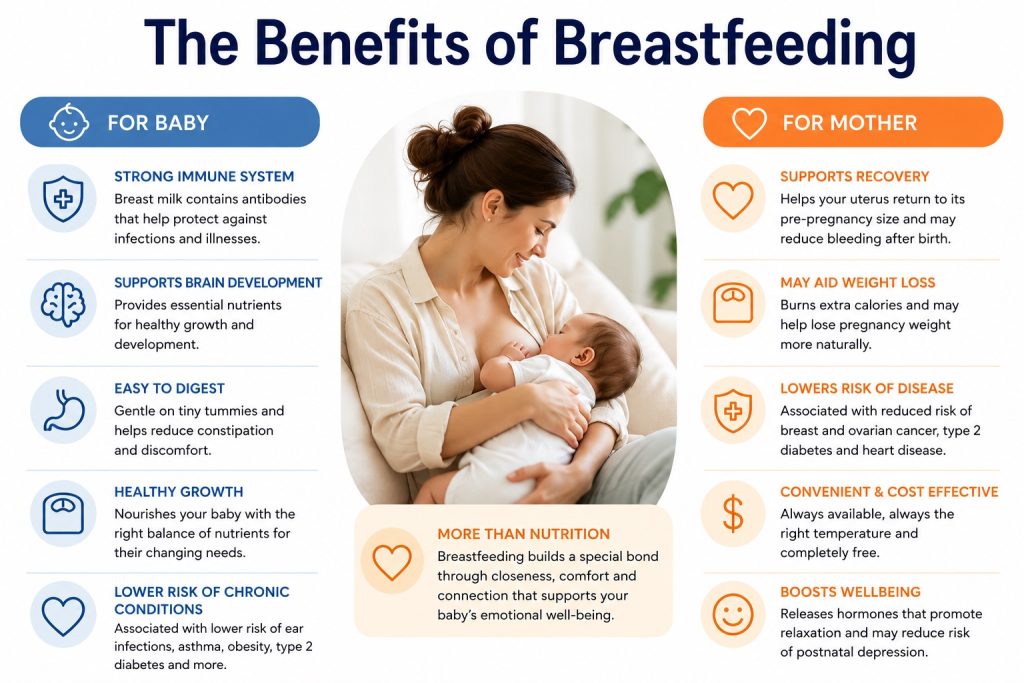
What are the health benefits for babies?
Research consistently shows that breastfeeding is associated with lower rates of many common childhood illnesses.
Compared with babies who are not breastfed, breastfed babies have a lower risk of:
- gastroenteritis (‘tummy bugs’)
- ear infections
- chest infections
- hospital admission for respiratory illnesses
- sudden infant death syndrome (SIDS)
- necrotising enterocolitis in premature babies
- childhood obesity
- type 1 diabetes
- type 2 diabetes.
Studies have also found modest improvements in cognitive development and learning outcomes.
Mothers who give birth prematurely produce milk specially adapted for premature babies.
What are the health benefits of breastfeeding for mothers?
Breastfeeding benefits mothers as well.
Research has found that women who breastfeed have a lower lifetime risk of:
- breast cancer
- ovarian cancer
- type 2 diabetes.
Breastfeeding also helps the uterus return to its normal size after birth and can reduce bleeding in the days following delivery.
Breastfeeding’s global impact
The medical journal The Lancet estimates that improving breastfeeding rates worldwide could prevent more than 820,000 child deaths every year.
Breastmilk has its own body clock
Scientists now describe breast milk as a form of chrononutrition because it carries biological signals that help teach babies about day and night. Breast milk changes throughout the day.
Morning milk naturally contains more cortisol, which helps babies become alert, while night milk contains more melatonin and tryptophan, compounds that may help babies develop healthy sleep–wake rhythms. Scientists are still learning how these remarkable day–night changes support infant development.

Helping mothers achieve their breastfeeding goals
Every family’s feeding journey is different.
While breastfeeding is natural, it doesn’t always come naturally. Learning to breastfeed takes time—for both mother and baby.
Many women stop breastfeeding earlier than planned because of sore nipples, concerns about milk supply, returning to work, exhaustion, or simply not having enough support.
One of the best ways to support breastfeeding is to surround new parents with practical help and encouragement rather than pressure.
You can help breastfeeding mothers by:
- preparing healthy meals
- helping with household chores
- encouraging mum to rest
- bringing baby to mum for feeds
- offering reassurance rather than judgement
- celebrating progress instead of expecting perfection.
Seeking advice early from a trusted health professional can often prevent small challenges from becoming bigger ones.
Remember, breastfeeding isn’t about being the perfect parent. It’s about giving your baby the best possible start while caring for yourself too.
Breastfeeding support on the Central Coast
This is World Breastfeeding Week! The United Nations supports breastfeeding as a sustainable and strong start to life for your child.
We know it isn’t always easy, but you don’t have to do it alone.
The Central Coast Local Health District Child and Family Health Nursing Service provides free breastfeeding support for local families.
Breastfeeding drop-in clinics are available at several locations across the Central Coast, including:
- Gosford
- Erina
- Kincumber
- Long Jetty
- Woy Woy
- Lake Haven.
Child and Family Health Nurses can help with:
- attachment and positioning
- sore nipples
- concerns about milk supply
- expressing breast milk
- baby weight checks
- returning to work while breastfeeding.
Narara Valley Medical also has doctors and nurses who can support you during pregnancy and post-natal care. This includes checking and advising on baby health, as well as mother and partner.
The Australian Breastfeeding Association (ABA) also has an active Central Coast group offering breastfeeding counsellors, local meet-ups, antenatal education and peer support.
If you’re struggling, don’t wait until things feel overwhelming. Asking for help early is one of the best things you can do for yourself and your baby.
More than a Cookbook
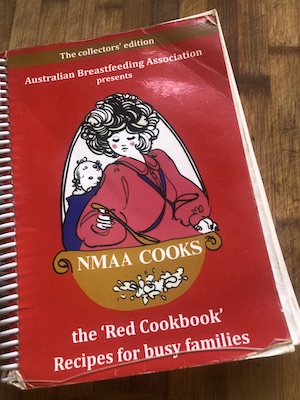
If you grew up in Australia, there’s a fair chance the Nursing Mothers’ Association Cookbook was sitting on the kitchen shelf somewhere between the CWA cookbook and the Women’s Weekly birthday cake book.
First published in 1975, it became a much-loved companion for generations of new parents, packed with simple meals, family favourites and practical advice. When the Nursing Mothers’ Association of Australia became the Australian Breastfeeding Association in 2001, the name changed, but the spirit remains the same.
The recipes are reliable and delicious!
Where can I find more breastfeeding support?
If you have questions about breastfeeding, speak with your GP, midwife or Child and Family Health Nurse.
Helpful Australian resources include:
- Australian Breastfeeding Association – breastfeeding information, counsellors and the National Breastfeeding Helpline and the virtual village.
- NSW Health – practical advice on breastfeeding, expressing and returning to work
- Central Coast Local Health District Child and Family Health Nursing Service.
- National Health and Medical Research Council (NHMRC) Infant Feeding Guidelines
- Book an appointment with your GP at Narara Valley Medical
Whether you breastfeed for a few weeks, six months or well beyond, every family deserves evidence-based information, compassionate support and the confidence to make informed decisions.
Sometimes the most valuable thing we can offer a new parent isn’t advice. It’s a listening ear, a home-cooked meal, or the reassurance that they’re doing a wonderful job.
Frequently asked questions about breastfeeding
How long should I breastfeed my baby?
Australian health guidelines recommend exclusive breastfeeding for around the first six months, followed by continued breastfeeding alongside appropriate family foods for 12 months and beyond, for as long as mother and baby wish.
What does exclusive breastfeeding mean?
Exclusive breastfeeding means that a baby receives only breast milk, without formula, other milk, food or water, unless medicines, vitamins or minerals have been recommended by a health professional.
What are the main health benefits of breastfeeding?
Breast milk provides complete nutrition for young babies and contains antibodies and other protective factors. Breastfeeding is associated with a lower risk of some infections and chronic conditions in children, as well as reduced risks of breast cancer, ovarian cancer and type 2 diabetes for mothers.
Is breastfeeding meant to hurt?
Some tenderness can occur in the early days, but ongoing pain, cracked nipples or significant discomfort may indicate a problem with positioning, attachment or another feeding issue. A midwife, child and family health nurse, lactation consultant or GP can help.
How can I tell whether my baby is getting enough milk?
Signs can include regular swallowing during feeds, steady weight gain, waking for feeds and producing an appropriate number of wet nappies. Speak with a qualified health professional if your baby is unusually sleepy, feeding poorly, losing weight or producing fewer wet nappies than expected.
Where can I get help with breastfeeding?
Support is available from your GP, midwife, child and family health nurse or an accredited lactation consultant. The Australian Breastfeeding Association also provides practical information and breastfeeding support for families.
Disclaimer: This information is general in nature and should not replace advice from your doctor or other qualified health professional. Please seek personalised medical advice if you have any questions or concerns about breastfeeding or your baby’s health.