
The Conversation that Could Save Lives
Carl lost his life but transformed nine others.
Donate Life Week encourages organ and tissue donation. It also asks you to have the conversation with your family letting them know your wishes.
Families are more likely to say yes to donation when they’ve had the conversation.

Carl* was 66 when he died in a fatal farming accident. He was a kind, hard working man who loved his farm and his grandkids.
When his family were asked to give their final consent to organ donation, they didn’t hesitate.
Yes, they said. He was always a generous man. He would have wanted his death to help somebody else.
Donate Life Week
This 28 July to 4 August is Donate Life Week. It is talking about organ and tissue donation.
There are 1800 people in Australia currently waiting for an organ.
A further 14,000 are on dialysis waiting for a kidney due to chronic kidney condition.
Australia is a world leader for successful transplant outcomes. Research says 4 in 5 people agree with becoming a donor, but only 1 in 3 register.
In the tragic event of a serious accident, a family is required to give final consent. In the midst of shock and grief, that consent is often withheld if they were not already aware of a donor’s decision.
Please have the conversation
This Donate Life Week, we ask you to consider becoming an organ and tissue donor. But we also ask you to have a conversation with your family about your decision.
If you have the conversation beforehand, they are more likely to follow your wishes.
Here are some interesting facts
- Most major religions are okay with organ and tissue donation.
- All ages can donate, including people over 70 years.
- You can still donate even if you have a health condition. You don’t have to be in perfect health to donate.
- According to Transplant Australia, one donation can save up to seven lives and transform up to ten.
Who Might Need an Organ or Tissue?
Lots of different people of all ages can benefit from your kind act.
- People with chronic kidney conditions
- People with severe burns
- Those with failing corneas who suffer from vision problems
What organs are usually donated?
Kidneys, lungs, heart, liver, pancreas, and large intestine (or colon) are the organs usually transplanted.
What tissues can be donated?
A tissue donation means parts of tissue are removed and transplanted into another person. Tissues that may be transplanted include heart valves, parts of the eye, heart tissue, veins, skin, tendons and ligaments, and more.
What if my family wants an open casket funeral?
Transplant surgeons are highly sensitive to the body of the donor. Just like a living person receiving surgery, the donor’s body will be treated with sensitivity and care. There will be no visible signs of organ or tissue donation. The donation process is treated with respect and dignity.
Myths about Organ or Tissue Donation
There are lots of myths about organ and tissue donation. It’s always your choice, but make sure you’re not misinformed by checking these frequently asked questions from the Donate Life website.
In 2024, there was a 3 percent increase in the number of donors over 2023. However, the consent rate was low at 53 percent. It is understandable to be in a state of immense shock and grief in such situations as having to consider giving consent for organ and tissue donation.
By having this awareness campaign, we are hoping families will consent to the wishes of donors who have registered.
Speak to your family about your decision to donate
Living Organ Donors
In some cases, people can also be living donors. Usually, this is a kidney or part of a liver to a relative or close friend. The living organ donors program supports these donors by reimbursing some out-of-pocket expenses and providing 9 weeks of minimum wage. It is not an incentive to donate. The rewards are deeply personal, not financial.
To register, visit donatelife.org.au/register
Talk to your family.
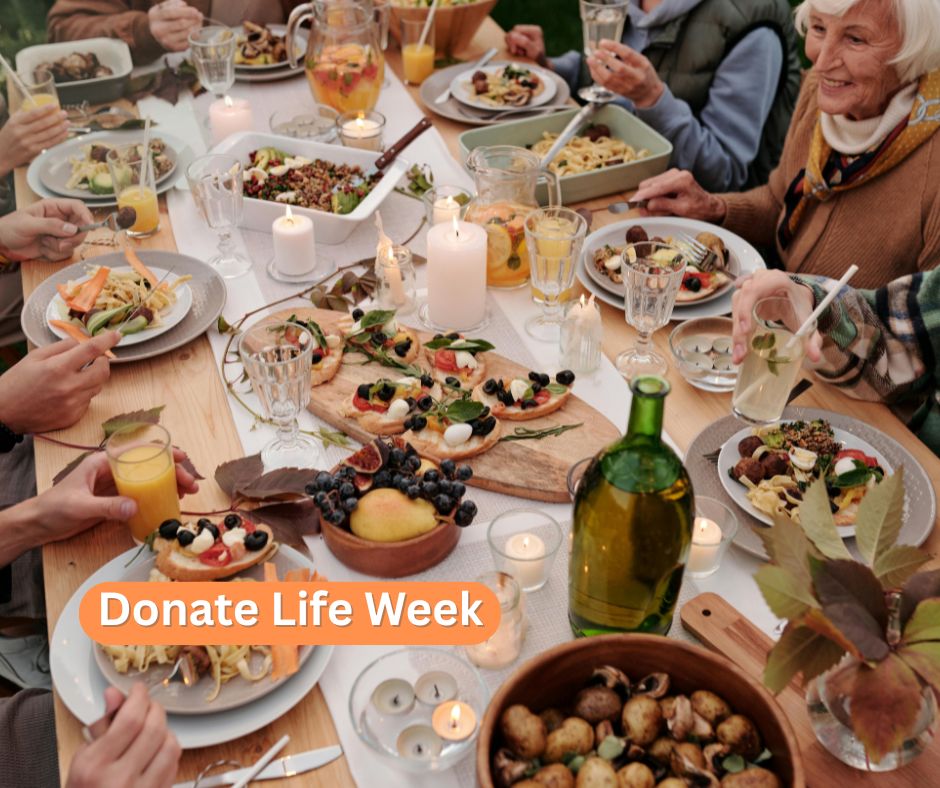
Two years after Carl’s funeral, his family had lunch with the families of nine strangers who had received organs from Carl or tissue. There was a six-year-old girl who had part of his liver. A 19-year-old man who had his lungs, a 44-year old mother had his heart, and others who had skin, valves, kneecaps, and a new cornea for sight.
The family didn’t realise how significant Carl’s decision to register had been. Even though it was devastating to lose Carl, they thought his transplant had helped one person. In fact, it had helped nine completely different people. And all of their families too. In total, the lunch was attended by more than 40 people.
Those nine all had only one thing in common—gratitude. They thanked Carl for registering as a donor. They were also grateful to his family for giving the final consent.
*Carl’s story is used for illustrative purposes. Carl is not a real person.
To register, visit donatelife.org.au/register
Talk to your family.
–
This article is general information only. It does not replace personal medical advice from your doctor. If you would like to discuss your health, please make an appointment at Narara Valley Medical.