It’s Not Just a Bad Period.
Adenomyosis is painful, confusing and often missed. Here’s what to know and how to get help on the Central Coast
Summary: Adenomyosis is a common but often missed condition where uterine lining tissue grows into the muscle wall. It can cause heavy periods, pain, fatigue and fertility challenges. If your cycle is disrupting your life, it’s worth understanding why — and knowing there are real options for support and care.

Jess Cancels Pilates. Again.
She stood in her bathroom, heat pack pressed to her abdomen, trying to decide if she could make it through work.
Her period wasn’t just inconvenient. It was overwhelming.
Heavy bleeding. Sharp, dragging pain. Exhaustion that clung. Bad periods, she’d been told. Wait it out.
So she did. For years.
What is adenomyosis?
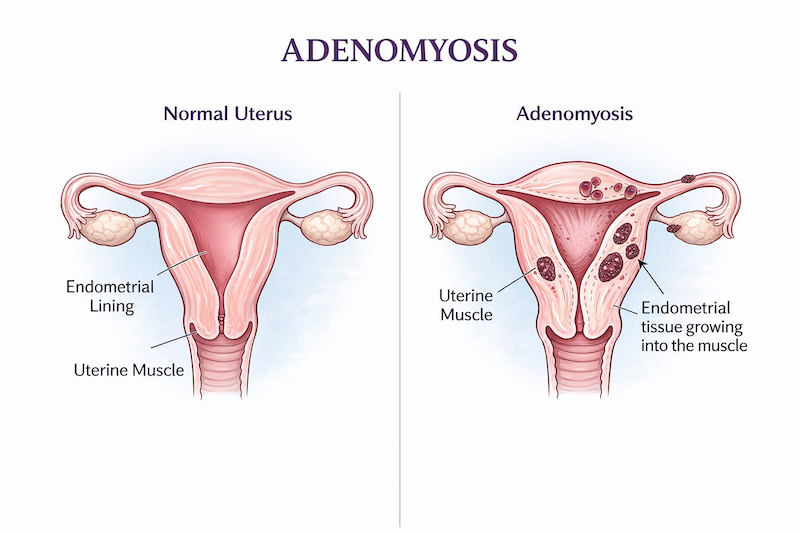
Adenomyosis occurs when tissue that normally lines the uterus (the endometrium) grows into the muscular wall of the uterus.
Each month, this tissue still thickens and bleeds — but trapped within muscle, it causes inflammation, pressure and pain.
The uterus can become enlarged and tender. The result is often a deep, aching pain and very heavy periods.
How common is adenomyosis?
Adenomyosis is more common than many realise.
Australian and international estimates suggest it may affect around 1 in 5 women, although exact numbers are unclear due to underdiagnosis.howmany
It most commonly affects women aged 30 to 50, particularly those who have had children — but younger women can also be affected.
Symptoms: more than ‘just a bad period’
Common symptoms include:
- Heavy or prolonged menstrual bleeding
- Severe cramping or pelvic pain
- A feeling of pressure or fullness in the abdomen
- Pain during sex
- Ongoing fatigue
- Fertility challenges or infertility
Adenomyosis vs endometriosis (what’s the difference?)
These two conditions are often confused — and sometimes occur together.
- Adenomyosis: tissue grows within the muscle wall of the uterus
- Endometriosis: similar tissue grows outside the uterus (for example, on ovaries, bowel or pelvic lining)
Both can cause pain and fertility issues. Both are underdiagnosed.
Why awareness matters
April is Adenomyosis Awareness Month — and it matters.
Too many women spend years second-guessing their own experience.
Why diagnosis can take time
Adenomyosis is often misdiagnosed or dismissed. Many women were told their symptoms were normal or something to push through.
In the past, it would take about 6-8 years to diagnose. These days, it may feel slow but things are improving.
Symptoms overlap with other conditions. Imaging (like ultrasound or MRI) can help, but it’s not always definitive.
- We have better awareness
- Better imaging
- More dedicated women’s health and endometriosis services across Australia.
Specialist care: gynaecologist or clinic
If symptoms are ongoing or complex, your GP will refer you to a gynaecologist.
This may include:
- Private gynaecologists
- Public hospital clinics
- Specialist pelvic pain or endometriosis clinics
In NSW, services may sit within hospitals under NSW Health or Central Coast Local Health District.
Do you need a referral?
Yes — in most cases.
To see:
- A gynaecologist (specialist) under Medicare
- A public hospital clinic
- Most endometriosis/pelvic pain clinics
👉 You will need a GP referral.
Without one, you usually can’t access subsidised specialist care.
What should I do if I’m concerned about pelvic pain?
Make an appointment with your general practitioner.
They can:
- Take a detailed history of your symptoms (bleeding, pain, fertility concerns)
- Do a physical examination if appropriate
- Order initial tests (usually a pelvic ultrasound)
- Start first-line treatment (pain relief, hormonal options)
Many women are first assessed and sometimes provisionally diagnosed by their GP based on symptoms and imaging.
However, adenomyosis can be tricky to confirm — so GPs will often refer on.
Jess has the final word
Painful, heavy periods are common. But they are not something you have to quietly endure.
Jess’s cycle was disrupting her life. But she decided to be proactive. It was worth asking questions.
She knew her body wasn’t being unreasonable. It was communicating something important.
Where to learn more and find support
- Adenomyosis Australia
https://adenomyosis.org.au/adenomyosis/ - Endometriosis Australia
https://endometriosisaustralia.org - Central Coast Women’s Health Centre
https://ccwh.org.au/ - NSW Health
https://www.health.nsw.gov.au - Central Coast Local Health District
https://www.cclhd.health.nsw.gov.au
*Jess is fictional. This article is general and doesn’t consider your personal medical situation or health needs. Please make an appointment with your doctor for the advice that’s right for you.