Could it be Type 2 Diabetes? Know the Signs and What to Do Next
Summary: Type 2 diabetes is a common condition where your body cannot use insulin properly, causing blood sugar levels to become too high. The good news is that healthy eating, regular exercise, maintaining a healthy weight, and taking medication when needed can help prevent or manage the condition.
What is diabetes?
Diabetes is a condition that causes high blood sugar.
Your body uses a hormone called insulin to move sugar from your blood into your cells, where it is used for energy.
If you have diabetes, this process doesn’t work properly.
There are three main types:
- Type 1 diabetes – the body stops making insulin.
- Type 2 diabetes – the body cannot use insulin properly or doesn’t make enough.
- Gestational diabetes develops during pregnancy.
Type 2 diabetes is the most common type.
Around 1.2 million Australians live with type 2 diabetes. On top of this number, it’s estimated that another half a million Aussies have it but don’t know.
But it’s not all doom and gloom. With support, healthy food, regular walking, medication if needed, and regular GP reviews, diabetes can be well managed.

Samu’s Story*
Samu is 58 and works as a Central Coast delivery driver. He spends long hours behind the wheel. By the time he gets home, he’s usually too tired to cook, so dinner is often takeaway.
Over the past few months, Samu has noticed a few changes. He’s thirsty all the time and gets up two or three times every night to use the bathroom. His vision sometimes blurs, he’s tired most afternoons, and the small cut on his shin from unloading a parcel is taking longer than usual to heal.
He put it down to getting older and working hard.
A routine visit to his GP told a different story. A simple blood test showed Samu had type 2 diabetes.
Today, Samu still drives for work. He still enjoys the occasional takeaway. But he also packs healthier lunches, walks most evenings, and works with his GP to keep his diabetes under control.
Small changes have made a big difference.
*Samu’s story is fictional but based on common experiences.
What are the signs of diabetes?
Many people with type 2 diabetes are unaware they have it. They feel well at first.
Common signs include:
- Feeling thirsty all the time
- Going to the toilet more often, especially at night
- Feeling tired
- Blurred eyesight
- Cuts or sores that are slow to heal
- Skin infections or thrush
- Losing weight without trying
If you notice these signs, book an appointment with your GP.
Can type 2 diabetes be prevented?
Many people can lower their risk.
You can help by:
- Eating more vegetables, fruit, wholegrains, and beans
- Cutting back on sugary drinks and highly processed foods
- Being active most days
- Keeping to a healthy weight
- Not smoking
- Having regular health checks
Small changes can make a big difference over time.
National Diabetes Week: 12–18 July
National Diabetes Week (12–18 July) is an annual campaign led by Diabetes Australia to raise awareness about diabetes, encourage early diagnosis, and support people living with the condition.
Try the diabetes Australia risk calculator
If you’ve been feeling unusually thirsty, tired, or are getting up more often at night to go to the toilet, now is a great time to book a health check with your GP.
Find out more about National Diabetes Week.
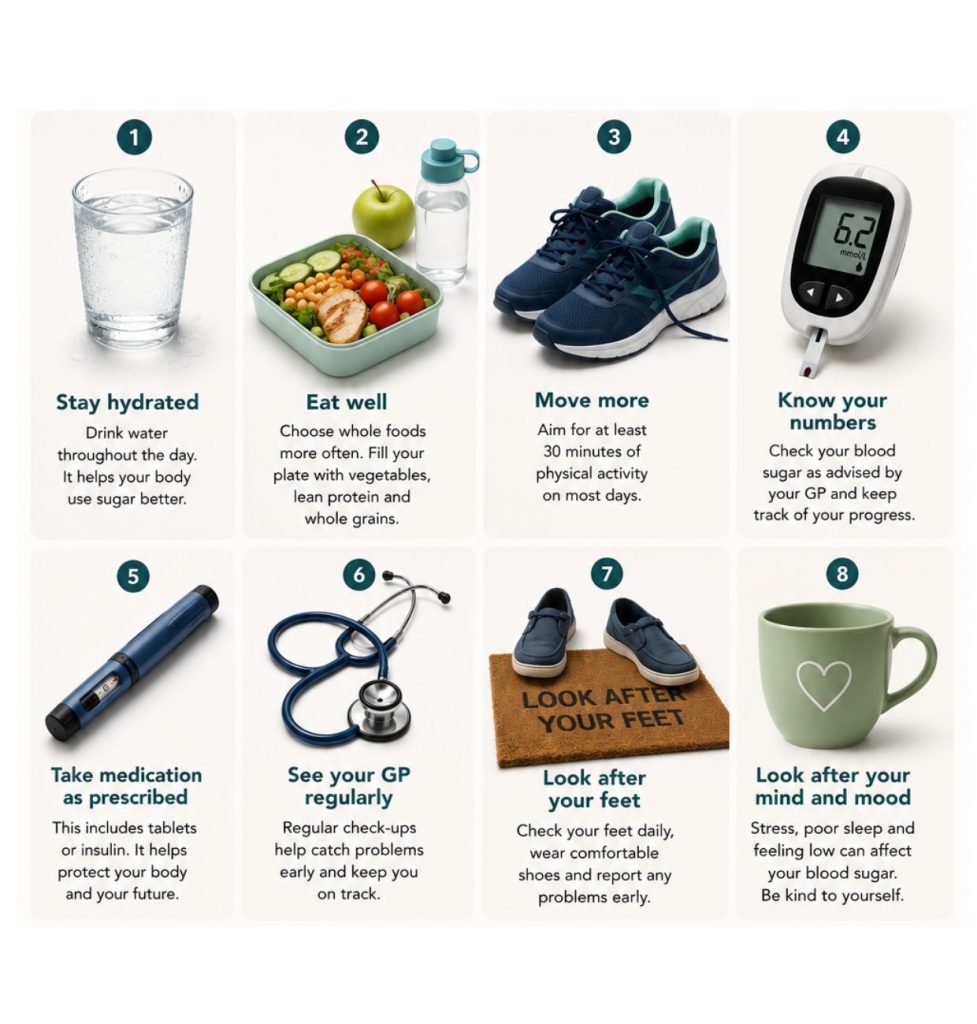
Living well with diabetes
Many people with type 2 diabetes live long, healthy and active lives.
Your treatment may include:
- Healthy eating
- Regular exercise
- Medication
- Insulin
- Regular check-ups with your GP
The aim is to keep your blood sugar at a healthy level and reduce the risk of future health problems.
Insulin is another way to help
Some people worry that needing insulin means they have failed. That’s not true.
Type 2 diabetes often changes over time. As you get older, your body may make less insulin.
Starting insulin can help keep your blood sugar under control. This helps protect your:
- Eyes
- Kidneys
- Heart
- Feet
- Nerves
Many people also find they have more energy and feel better once their blood sugar is well managed.
When should I see my GP?
Book an appointment if:
- You have symptoms of diabetes.
- Diabetes runs in your family.
- You are worried about your risk.
Finding diabetes early can help prevent serious health problems.
Frequently asked questions
Can type 2 diabetes go away?
Some people can put type 2 diabetes into remission through healthy lifestyle changes and weight loss. This does not mean it is cured. Regular GP check-ups are still important.
What are the first signs of diabetes?
Common signs include feeling very thirsty, going to the toilet more often, feeling tired, blurry eyesight, slow-healing cuts, and skin infections or thrush. Some people have no symptoms.
Does eating sugar cause diabetes?
No. Type 2 diabetes is caused by a mix of things, including family history, age, body weight, physical activity and lifestyle. Sugary drinks and highly processed foods can increase risk if they lead to weight gain.
Can I still enjoy food if I have diabetes?
Yes. Most people with diabetes can enjoy a healthy, balanced diet. You do not need special foods. Your GP, diabetes educator or dietitian can help you make a plan that suits your life.
Will I need insulin?
Some people with type 2 diabetes need insulin over time. This is not a sign of failure. Insulin can help keep blood sugar at a healthy level and protect your eyes, kidneys, heart, feet and nerves.
When should I see my GP?
Book an appointment if you have symptoms of diabetes, diabetes runs in your family, or you are worried about your risk. Finding diabetes early can help prevent serious health problems.
Further information and resources
Australian Institute of Health and Welfare
https://www.aihw.gov.au/reports/diabetes/diabetes
Diabetes Australia
https://www.diabetesaustralia.com.au
National Diabetes Services Scheme (NDSS)
https://www.ndss.com.au
Central Coast Local Health District – Diabetes Services
https://www.cclhd.health.nsw.gov.au/services/diabetes/
Bungree Aboriginal Association – Diabetes Hub
https://bungree.org.au/health-diabetes-hub/
This information is general in nature and does not replace medical advice. If you have symptoms of diabetes or are worried about your health, please book an appointment with your GP.