Don’t Forget Your Lunchbox
National Lunchbox Week is 9 to 15 February this year.
Lunchboxes can be a daily joy… or a daily source of mild panic. If you’ve ever stood in the kitchen wondering whether a slightly bruised banana still counts as “healthy”, you’re not alone. That’s where National Lunchbox Week comes in — a timely reminder that lunchboxes don’t need to be perfect to be nourishing.
What is National Lunchbox Week?
National Lunchbox Week is an annual Australian initiative that encourages families to pack balanced, enjoyable lunches for school, childcare or work. It focuses on building positive food habits, reducing stress around lunchbox choices, and helping people feel confident about everyday meals.
It usually runs early in the school year, when routines are settling in and everyone is still adjusting to mornings that feel a bit too short.
Learn more at:
https://nutritionaustralia.org/services/healthy-lunchbox-week/
Who started National Lunchbox Week?
National Lunchbox Week is led by Nutrition Australia, a well-established Australian not-for-profit organisation that promotes evidence-based nutrition information. They provide free resources, recipes and practical ideas designed to be realistic for busy households — not just picture-perfect lunchboxes.
There are downloadable resources, fact sheets, and posters available for families, schools and educators:
https://www.lunchboxweek.org/
Why is there a National Lunchbox Week?
Packing lunches can come with pressure — social media expectations, time constraints, fussy eaters, allergies, budgets and cultural preferences all play a role.
National Lunchbox Week aims to:
- Encourage realistic, balanced lunchbox choices
- Reduce guilt and comparison around food
- Promote variety and enjoyment, not perfection
- Support positive relationships with food
It’s about progress over perfection — and remembering that one lunch does not define overall health.
What should I put in a school or work lunchbox?
A helpful guide is to aim for variety across the week using foods from the five food groups. That might include:
- Vegetables and fruit (fresh, frozen or cooked)
- Grain foods such as bread, wraps or rice
- Protein foods like eggs, legumes, lean meats, tofu or yoghurt
- Dairy or suitable alternatives
- Water as the main drink
NSW Health offers practical lunchbox guidance here:
https://www.health.nsw.gov.au/heal/Pages/healthy-lunchboxes.aspx
Exact portions and combinations will vary by age, appetite and activity level.
What about cultural, vegetarian or vegan lunchboxes?
Lunchboxes can reflect culture, tradition and dietary needs. Vegetarian and vegan lunchboxes can meet nutritional requirements when they include a variety of foods.
Protein is found in beans, lentils, chickpeas, tofu, tempeh, nuts, seeds, wholegrains and many vegetables. Calcium is also present in leafy green vegetables, calcium-set tofu, tahini, almonds and calcium-fortified plant milks and yoghurts.
With variety across the week, plant-based lunchboxes can be nourishing and appropriate for growing bodies. Families with specific medical or dietary concerns may benefit from personalised advice from a GP or accredited practising dietitian.
For ideas, recipes and free resources, visit Nutrition Australia’s National Lunchbox Week hub:
https://nutritionaustralia.org/services/healthy-lunchbox-week/
Oats Were Involved
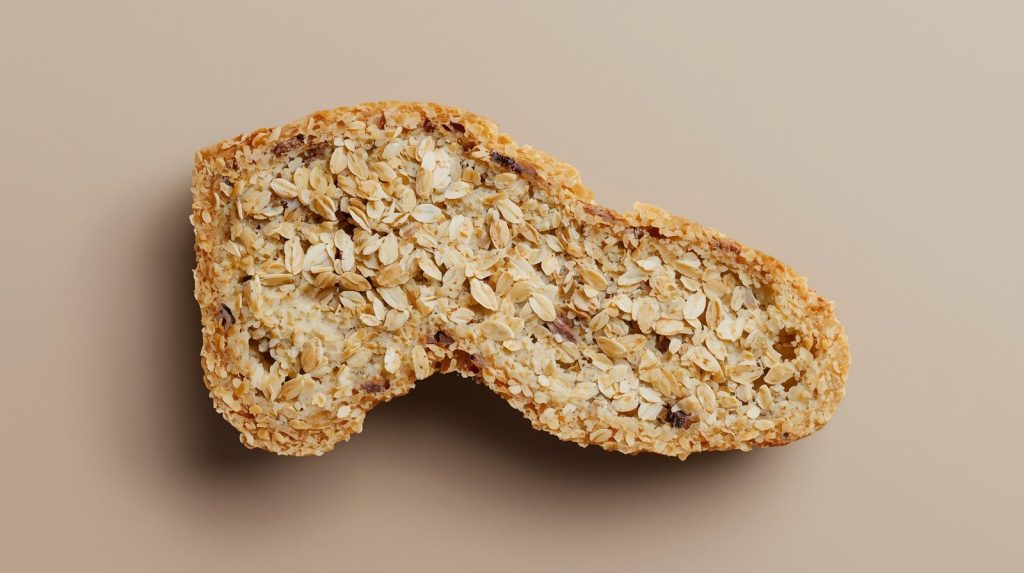
Jen* stood in the kitchen at midnight. The oat-seed experiment looked nothing like Pinterest promised. Another internet fail. Although it was nutritious, it did not spark joy.
She knew home-made was always better. She’d tried muffins, bliss balls, even carrot stars cut with a biscuit cutter. Her child ate… half a sandwich and the apple.
Now Jen was back at work. Baking was not part of her skill set. She took a breath and made a decision. She wasn’t a chef. She’d go simple.
Sandwich. Fruit. Yoghurt. Done.
The dog might like the oat biscuits. They were slightly bone-shaped.
*Jen is fictional.
This article is for general information only. It doesn’t consider your specific health or dietary needs. For personalised advice, speak to your doctor or a nutritionist.