
Is Your Workplace Diabetes Friendly?
November 14 marks World Diabetes Day.
In Australia, 1.9 million people have diabetes. According to Diabetes Australia, that includes the 1.3 million who’ve been diagnosed and up to half a million who don’t even know they have diabetes. More than 300 people develop diabetes every day, and 120,000 people were diagnosed in the last year.
The latest data reveals the scope of our diabetes problem.
Between 2000 and 2021, the number of diabetes cases in Australia tripled, according to the Australian Institute of Health and Welfare. Like the rest of the world, the numbers are still rising. So what’s going on with diabetes?
What are the Different Types of Diabetes?
In all types of diabetes, blood sugar levels are too high. There are a few different types.
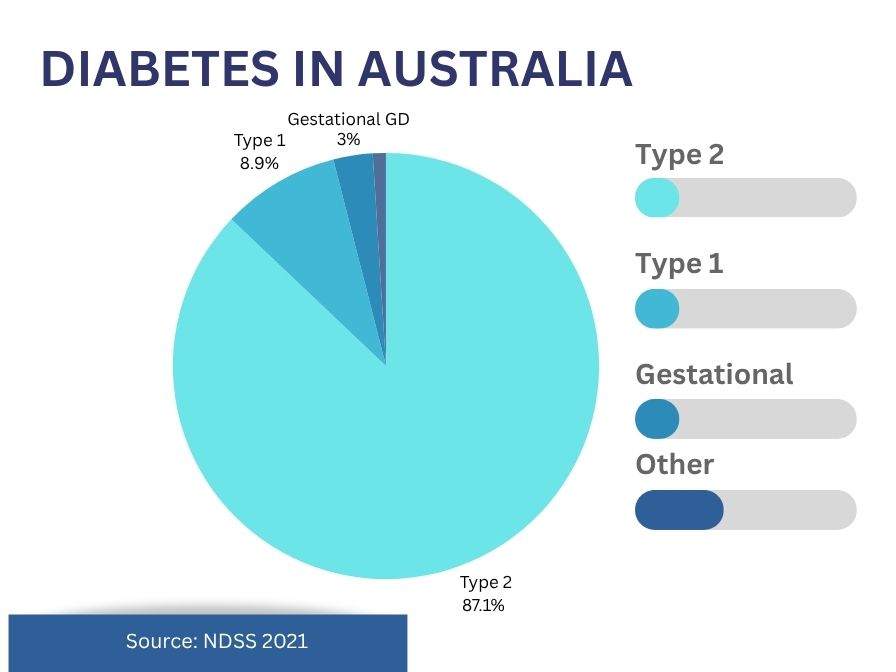
Type 1 Diabetes (T1D) is an autoimmune condition—not related to diet or lifestyle—where the body’s immune system mistakenly attacks and destroys the insulin-producing cells in the pancreas. This means the body doesn’t have enough insulin, which it needs to move glucose from the bloodstream into the body’s cells for energy.
People with type 1 must constantly replace this missing hormone, typically through multiple daily insulin injections or an insulin pump. They need to monitor their blood glucose, count carbohydrates, and manage the ever-present risks of dangerously high (hyperglycemia) or low (hypoglycemia, or a ‘hypo’) blood sugar. Type 1 diabetes accounts for about 10 percent of diabetes in Australia.
Type 2 Diabetes (T2D) is the most common form of diabetes, accounting for around 85 percent of Australian cases. Type 2 is not an autoimmune condition. Instead, T2D occurs when the body either:
- Becomes resistant to insulin (the cells don’t respond well to the insulin produced)
- The pancreas cannot produce enough insulin to overcome this resistance and maintain normal blood glucose levels
T2D typically develops slowly over time. It’s strongly associated with modifiable risk factors like being overweight or obese, a lack of physical activity, and a poor diet, in addition to non-modifiable factors like genetics and increasing age. It is often managed through diet, exercise, oral medication, and sometimes insulin.
Gestational diabetes(GD) is a type of diabetes that only develops during pregnancy where the mother’s blood sugar (glucose) levels are too high.
- It happens because the hormones from the placenta block the body’s ability to use its own insulin effectively. This is called insulin resistance.
- It’s usually diagnosed in the second half of pregnancy (around 24 to 28 weeks).
- For most women, GD goes away shortly after the baby is born.
- When gestational diabetes is effectively managed, the risks for both mother and baby are greatly reduced, and the pregnancy is likely to proceed without major complications.
Less common types of diabetes include MODY (maturity-onset diabetes of the young) and LADA (latent autoimmune diabetes in adults), and others.
What are the Symptoms of Diabetes?
Diabetes, whether diagnosed or not, can result in feeling:
- very thirsty or hungry
- tired
- experiencing unexpected weight loss or weight gain
- slow healing (or not healing) wounds
- blurred vision
- frequent infections (such as urinary tract infections)
Complications from Diabetes
The biggest problems caused by diabetes include:
- blindness
- amputations
- heart disease
- kidney disease
How can I remain healthy with diabetes?
To stay healthy with diabetes, you should manage your blood glucose levels through regular physical activity, follow a healthy eating pattern rich in whole, unprocessed foods (like vegetables, whole grains, and healthy fats), and limit processed foods.
Try to avoid added sugar, unhealthy fats, and stick to your prescribed medication or insulin.
What support can people with diabetes receive?
If you’ve been diagnosed with diabetes, you can get access to the National Diabetes Support Scheme. This provides you with subsidised products to help manage your diabetes, the NDSS Helpline on 1800 637 700, as well as education, general advice, and support.
World Diabetes Day focuses on type 1 diabetes, the autoimmune condition. The theme for this year is workplaces.
How can I create an Inclusive workplace?
Workplaces can make a tangible difference by adopting simple, supportive measures, which often fall under the category of ‘reasonable adjustments‘ required by disability legislation.
1. Flexibility is Key
The demands of diabetes management can’t always follow a tight schedule.
- Breaks: Allow employees the flexibility to take short, unscheduled breaks to check blood sugar levels, administer insulin, or respond immediately to a hypo.
- Mealtime Flexibility: Allow adjustments to lunch or tea break times. Insulin dosing and eating must be coordinated, and delays can impact blood sugar control.
2. Providing Dignity and Privacy
Administering insulin or checking a blood sugar level is a medical necessity that should be treated with respect.
- Designated Space: Provide access to a clean, private, and non-judgmental space to perform self-care tasks. This should never be a bathroom, as insulin injections and glucose checks require hygienic conditions.
- Secure Storage: Ensure access to a refrigerator for insulin storage and space for emergency hypo treatments.
3. Education and Emergency Awareness
A supportive colleague is often the best line of defense during an emergency.
- Hypo Training: Encourage the employee to share information with their manager and first-aiders on how to recognise the symptoms of a hypoglycemic event (shaking, confusion, dizziness) and how to administer simple, immediate help.
- First Aid Kit Inclusion: Ensure the workplace First Aid Kit contains a basic source of fast-acting sugar (like glucose tablets or juice) and that First Aid officers are briefed on T1D.
Mark’s Story* – work life with type 1 diabetes

“When people hear the word diabetes, they often think it’s just about avoiding sugar. But for me, it’s a full-time balancing act — even while I’m at work
I was diagnosed with type 1 diabetes when I was 32. Now I’m 50 and working in an office. My days are like anyone else’s — emails, deadlines, coffee runs — but with one extra layer: constantly keeping an eye on my blood sugar.
I check my glucose a few times a day. Sometimes it’s fine. Other times it’s low and I need to eat something straight away. It can happen at awkward moments — like right before a meeting or when I’m talking with a client. I’ve learned to keep muesli bars in my drawer and a glucose monitor in my bag.
At first, I was self-conscious about testing or injecting at work. I didn’t want people to think I was unwell or ‘different’. I even skipped a check once because I didn’t want to draw attention to myself. That was a mistake — I ended up shaky and couldn’t concentrate for the rest of the day.
Eventually, I told my manager, and it was a huge relief. He was understanding and said, ‘Just do what you need to do.’ That simple support changed everything. Now I can step away when I need to, and my team knows it’s just part of my routine.
Having diabetes at work can be challenging. I’ve learned that being open — and having a workplace that listens — makes it easier to stay healthy and do my job well.
It’s not about special treatment, it’s about awareness. A little understanding goes a long way.”
*Mark’s story is a fictional social story.
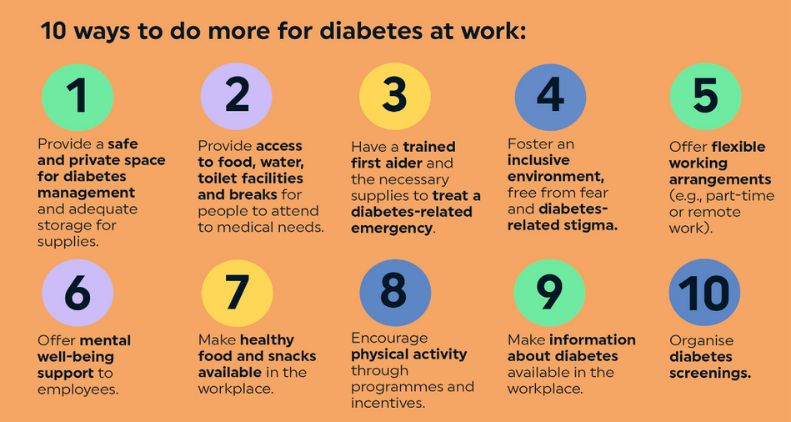
Workplaces are encouraged to do these ten things.
This World Diabetes Day, let’s acknowledge the daily effort people with diabetes put in. For that person, their routine isn’t just a list of tasks—it’s a demonstration of consistent, quiet strength.
Remember, a large number of people are undiagnosed and don’t know they have diabetes. If you’re not sure, try the symptom checker on the Health Direct website. Or book an appointment with your doctor.
More Info and Resources
- Diabetes Australia: https://www.diabetesaustralia.com.au/
- Australian Institute of Health and Welfare (AIHW) – Diabetes Facts: https://www.aihw.gov.au/
- National Diabetes Services Scheme (NDSS): https://www.ndss.com.au/
- Health direct: https://www.healthdirect.gov.au/diabetes#symptoms
This article is general in nature and shouldn’t be relied on as a substitute for personal medical advice. See your Narara Valley doctor for the advice that’s right for you.