Travelling to Japan in January
What to take, do, and know if you plan to visit the land of the rising sun this month
It’s January and after a busy year and Christmas all sorted, you deserve a holiday! Where to go?
According to SBS News, Australians are obsessed with Japan! Thanks to the favourable dollar-to-yen exchange rate, more Aussies are off to the land of the rising sun than ever.
Japan is safe, friendly, polite, and free of major pollution (except, ahem, nuclear radiation – avoid Fukushima). And it’s a fascinating mix of new and ancient, city and sea.
Here is an overview of what to take, know, and do if you’re planning a trip to Japan this January.
Visas and Passport Essential Information
Australians can visit Japan without a visa for up to 90 days if it’s for short-stay tourism or business. As long as you have a passport. Ensure your passport is valid for at least six months beyond your intended stay.
Check the latest travel advice from the Australian Government’s Smartraveller, or the Japanese Embassy, for any updates on entry requirements.
Currency exchange
As of 27 December 2024, one Australian dollar was equivalent to 98 Japanese yen, but this changes constantly. What makes Japan so popular now, is likely to be this near parity exchange rate.
Getting Yen
It can be useful to exchange some money at the airport so you can arrive with yen for transport to your accommodation. However, the airport rates are not the best and you might be better using Japanese ATMs with your Visa or Mastercard. Check for the logo. Bank fees will apply.
You can also get yen from your bank in Australia, or at small convenience stores (konbini) in Japan, such as 7-Eleven, Lawsons, Ministop, and Circle-K.
What to Take
If you can’t afford travel insurance, you can’t afford to travel.
Seek a good travel insurance policy with the dates before you leave. Include lost luggage, medical emergencies, and evacuation.
Prescriptions of any medicines you need. You may need to also have an accompanying letter from your doctor saying why you need them. Take the correct amount for your stay. For example, don’t travel with a jumbo box of pills when 10 would be reasonable for a short trip.
A small medical kit: Pack a small but essential travel medicine kit. See your doctor for a health check and make sure you’re up to date with your prescriptions, medicines, and understand what you can travel with. Narara Valley Medical has a handy Traveller’s Medical Checklist before you go.
Narara Valley Medical is staffed by keen travellers and experts at delivering Travel Medicine. Some doctors have a Master of Public Health and Tropical Medicine.
See us at least six weeks before your departure date if you can.
What to Know
It’s Peak Flu Season: January is peak flu season in Japan, so you may decide to get a flu shot before you leave Australia. Charges may apply. Speak to your doctor.
Travel Immunisations: There are no specific immunisations recommended but it is best to make sure you’re up to date with your routine vaccinations, such as measles-mumps-rubella (MMR), diphtheria-tetanus-pertussis (DTaP), varicella (chickenpox), and polio.
The following immunisations below are optional and will incur a cost.
Hepatitis A: This vaccine is recommended for most travellers to Japan due to the risk of food or water contamination.
Hepatitis B: This vaccine is recommended for travelers who may have activities that put them at increased risk, such as getting a tattoo, having sex with a new partner, or undergoing medical procedures.
Japanese Encephalitis: This vaccine is recommended for travelers who will be spending a significant amount of time in rural areas, especially during the warmer months when mosquitoes are more active.
Rabies: This vaccine is recommended for long-term travellers or those who may come into contact with animals. (Note: these immunisations are optional and incur a fee)
Speak to your doctor about any health worries or chronic conditions you may have.
A Case Story – The Connors
The Connors* recently returned from a one-week trip to Japan. Although only a 10-hour flight from Sydney to Tokyo, Japan is located in the northern hemisphere. That meant the Connors were trading Australia’s scorching summer for Tokyo’s winter chill. The Connors travelled from Sydney direct to Narita (Tokyo) on Japan’s main Island of Honshu.
With a somewhat limited budget, the Connors decided to swap the blockbuster entertainment, such as Disneyland, Universal Studios, and DisneySea, for nature and culture, which would be less expensive. Their teenage son and daughter were happy with that plan.
Window shopping in Ginza
With a penchant for window shopping, the family followed Ginza’s maze of alleys that led them to hidden ramen dens and hushed tea rooms.
They wandered down a side street, the noise of the city fading slightly. The aroma of grilled fish and sizzling yakitori wafted from a small, unassuming izakaya. Drawn by the inviting smells and the sound of a melancholic shamisen, they ducked inside.
The izakaya was a world away from the opulent boutiques of Ginza. The air was thick with the chatter of locals, They ordered simple dishes of edamame and yakitori, the prices surprisingly affordable.
Exploring Tokyo
The Connors decided they would walk along the famous Shibuya crossing and take a train to Blade Runner’s Shinjuku Station (eki).
After a lunch stop at JR Takashimaya (David Jones food court on steroids), they went into the cool enclave, Akihabara. Here, Mr Connor indulged his love of electronics and purchased some new gear at a huge discount compared to back home. The teenagers enjoyed bubble tea at a Maid Cafe nearby where the staff dressed as anime characters.
Onsen at Gifu
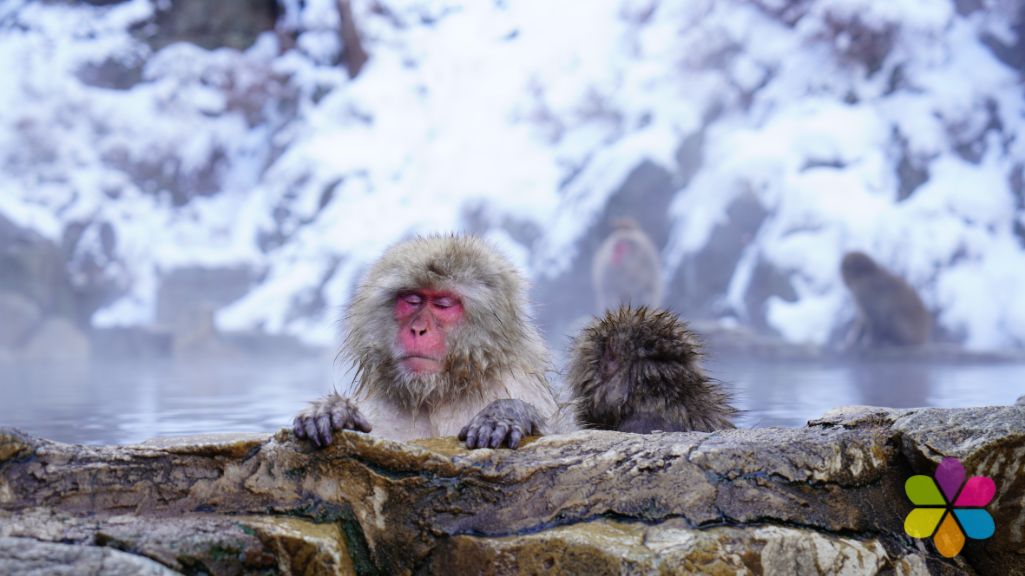
Two days later, the train rolled toward the centre of Honshu, into a snow-blanketed prefecture called Gifu. The Connors snowboarded all morning and in the afternoon dipped into the steaming natural hot spring (onsen). Red-faced snow monkeys peeped at them and came very close. They all shrieked with delight as one macaque jumped into the natural spring and closed its eyes, like grandpa was relaxing beside them.
They stayed in a ryokan (a traditional Japanese inn). While they enjoyed dinner, the host prepared their sleeping area by laying out futons on the tatami mats. In the morning, a low table arrived, laden with miso soup, rice, and a delicious assortment of breakfast. They expressed their gratitude by saying Domo arigatou gozaimashita (thank you very much) and gochisosama deshita (what a feast we’ve had).
The next day, they boarded the Shinkansen (bullet train). It was a clear blue sky and they enjoyed a fleeting glimpse of Mount Fuji on the journey toward Kyoto. It was silent and the landscape showed serene and beautiful snowcapped mountains, with small towns and villages.
Sublime Kyoto
At Kyoto Station (eki), the family descended a pyramid of escalators. Once at the bottom, the city itself was an otherworldly blend of ancient and eye-poppingly futuristic. They first visited Kinkaku-ji (the golden pavilion) and saw it reflected perfectly in the pond. The snowy park had fewer visitors but many winter blooms emerged from the sculptural tree limbs.
Kyoto seemed magical. Alleys delighted with bowls of noodle soup, colourful sweets, and handmade trinkets.
Strolling along the old quarter of Gion, the family spotted an early evening apprentice geisha, (maiko), wearing an intricate kimono, with long flowing sleeves, hair ornaments, and thick wooden shoes.
Osaka Departure
Finally, Osaka! The city’s vibrant pulse and delicious Dotonbori street food became their last stop. They were stimulated by incredible architecture, creative street art, and immersive night lighting.
Osaka had the energy and size of its Australian sister city, Melbourne, and was a fitting final stop. They were able to fly home to Sydney from Osaka airport. The teenagers had no regrets about missing the blockbuster entertainment. Their trip had been different and deeply satisfying.
*The Connors are a fictional family not based on real people.
Travel Recommendations
Food Safety: Avoid uncooked food wherever possible, except of course sashimi-grade sushi. Try not to take many risks around street food and seafood.
Sun Safety: Protect yourself from sunburn, even when it’s snowy. Use sun protection (sunscreen, hats, sunglasses) due to strong UV radiation.
Safe drinking water. Japan’s water is safe and regularly tested, but you may prefer the flavour of purchased water. Stay hydrated when travelling for your own comfort.
Wash hands often: Greater Tokyo houses more people than Australia’s entire national population. Some tight places are very crowded such as the trains and stores. Hand hygiene will reduce the spread of infection.
Wear a mask if you have a cold. In Japan, it is cultural to wear a mask if you have a cold. Consider doing the same if you get sniffly. If you feel well, a mask on the train will keep you safer from becoming infected when you’re on holidays.
Homesickness and culture shock. Travelling to new places can be exciting but also challenging. It’s common to feel homesick, especially children. If you’re facing any mental health challenges, familiar routines like mealtimes and bedtime can help. Getting enough sleep also aids your body to rest and recover.
Mindfulness exercises like yoga nidra can help children or anyone take a break from their stress and relax. Insight Timer is a free app that can be useful.
Mirror the politeness by learning some phrases. Japanese people are renowned for their immaculate grace and good manners. Duolingo is an app that will help you feel less awkward by giving you a few handy and culturally important expressions, which you’ll reuse. Case in point: Sumimasen is ‘excuse me’. Use this before asking a question of a stranger/shopkeeper.
Natural disasters: Earthquakes, tsunamis, typhoons, floods, landslides, and volcanoes are all endemic to Japan.
Look at the official travel advice for recommendations. If you run into trouble, the Department of Foreign Affairs and Trade can help Australians overseas.
The NHK broadcaster in Japan has English language news and an app for emergencies like earthquakes. You can download the app free of charge to keep up-to-date.
Itching to go?
Me too! Remember to check the latest travel advisories such as Smartraveller for entry requirements from the relevant government sources before your trip.
Japan Guide has excellent insider information about seasonality and new year travel. Expect it to be different from the boozy fireworks of Australia.
Tripadvisor has information from fellow travellers including travel insurance, hotels, events, and shopping.
Check out Narara Valley Medical’s Travel Medicine page
Make an appointment with your GP to discuss your health and your travel plans. They will help you do what you want, safely.
Safe and happy travels!
General information warning: Please note this article should not be considered as travel or medical advice. It doesn’t consider your personal health, circumstances or needs. Always see your doctor for the right advice.
*The Connors are a fictionalised family.